
 RSS Feed (xml)
This is an interesting video about Japan. The most interesting part of it is that the author took down the English version of it. I’d like to know more about his decision to do so, because I suspect that there is a deeper story in it than the story of the video itself.
When we first watch this, we assume that the author is being self-critical, but he says this video represents a “foreigner’s point of view”. This is rather confusing. What he ends up telling is what he thinks is a foreigner’s point of view, so we are not sure who is telling the story. If this is indeed a foreigner’s point of view, it’s not being self-critical. It would be a foreigner pointing his finger at another nation. If we were to view it that way, the story is highly skewed and biased, verging on racism, because it does not put all the issues in a proper International perspective. So, we can accept his arguments only as self-criticism. If the video is being self-critical, stating that this is a “foreigner’s point of view” is a cop out. As one commenter pointed out on Vimeo; he is trying to avoid taking responsibility for his own opinions (which is typically Japanese).
I personally think that: he really wanted to promote self-criticism among the Japaneses, he also wanted to tease themselves, wanted some fun. Maybe, in order to increase the good reception of his video, he purposely made the video funny. Well, the video was made based in facts, but…he was gross. I don’t liked the way that he used to promote the quarrel. He used a funny way to represent the Christian figure of dying and going to the Heaven. If exist something that we have to be extremely careful to talk about, it is religion. Specially when the quarrel involves people of many different beliefs. I also was surprised how he could make fun about the nuclear bombings. I was a bit shocked because it.

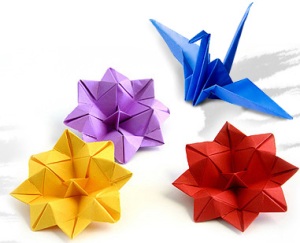 is the traditional Japanese art of paper folding. The goal of this art is to create a representation of an object using geometric folds and crease patterns preferably without the use of gluing or cutting the paper, and using only one piece of paper.